Before we get into both historical and modern Pictish tattoos let’s take a quick look at who the Picts were. The Picts or ‘Picti’ were given their name by the Roman Britoni sometime in late 200 CE to early 300 CE. The earliest known document with the name ‘Picti” written on it comes from 297 CE in Roman Britain titled ” Panegyric of Constantius Cesar” (Clarkson Chapter 3). The Name ‘Picti’ literally means “painted men” which is both a bit on the nose and a bit misleading when speaking about tattoos (Lodder, pg. 12).

The Picts called what is now known as mainly Scotland (but Great Britain as a whole) home from about 200 CE to 900 CE, according to accounts of invading forces, missionaries and from modern archaeological evidence ( Clarkson Chapter 1). Unfortunately the Picts did not leave behind a written language, but numerous accounts of different peoples have described the Picts as “‘painted people” and in fact, Greater Britain is even known as the “Land of the Painted People” (Clarkson Chapter 1 and Lodder, pg. 11).
“All the Britons dye themselves with woad,
which produces a blue colour, and makes their
appearance in battle more terrible.”
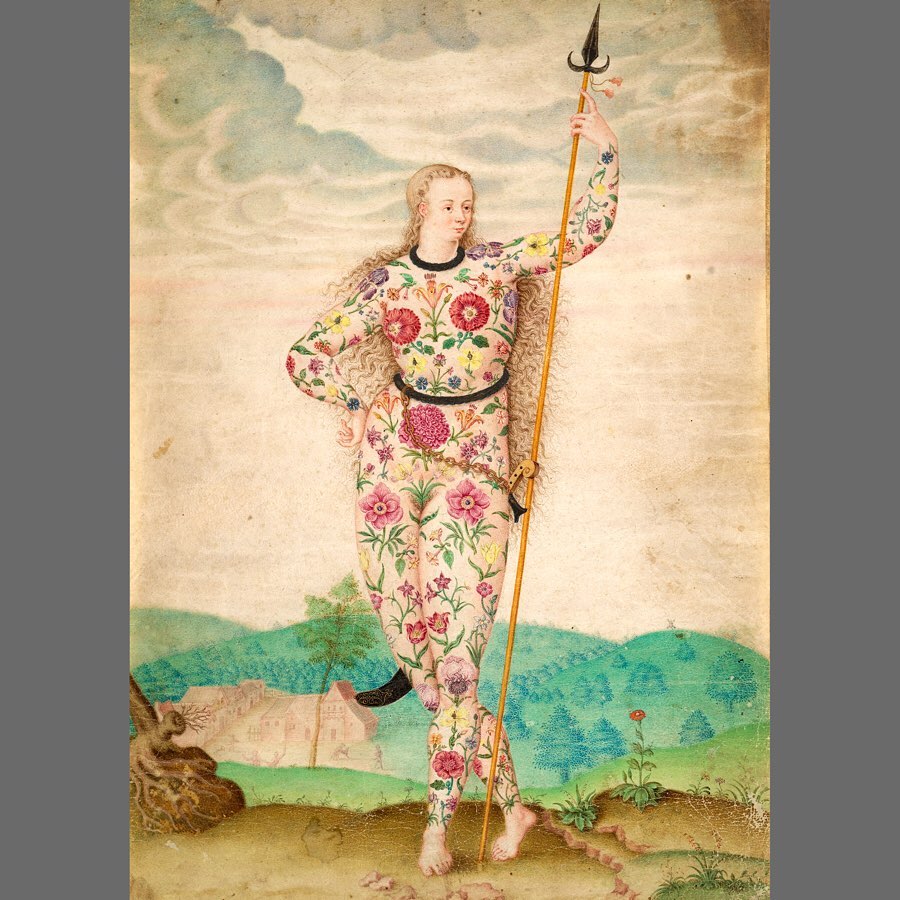
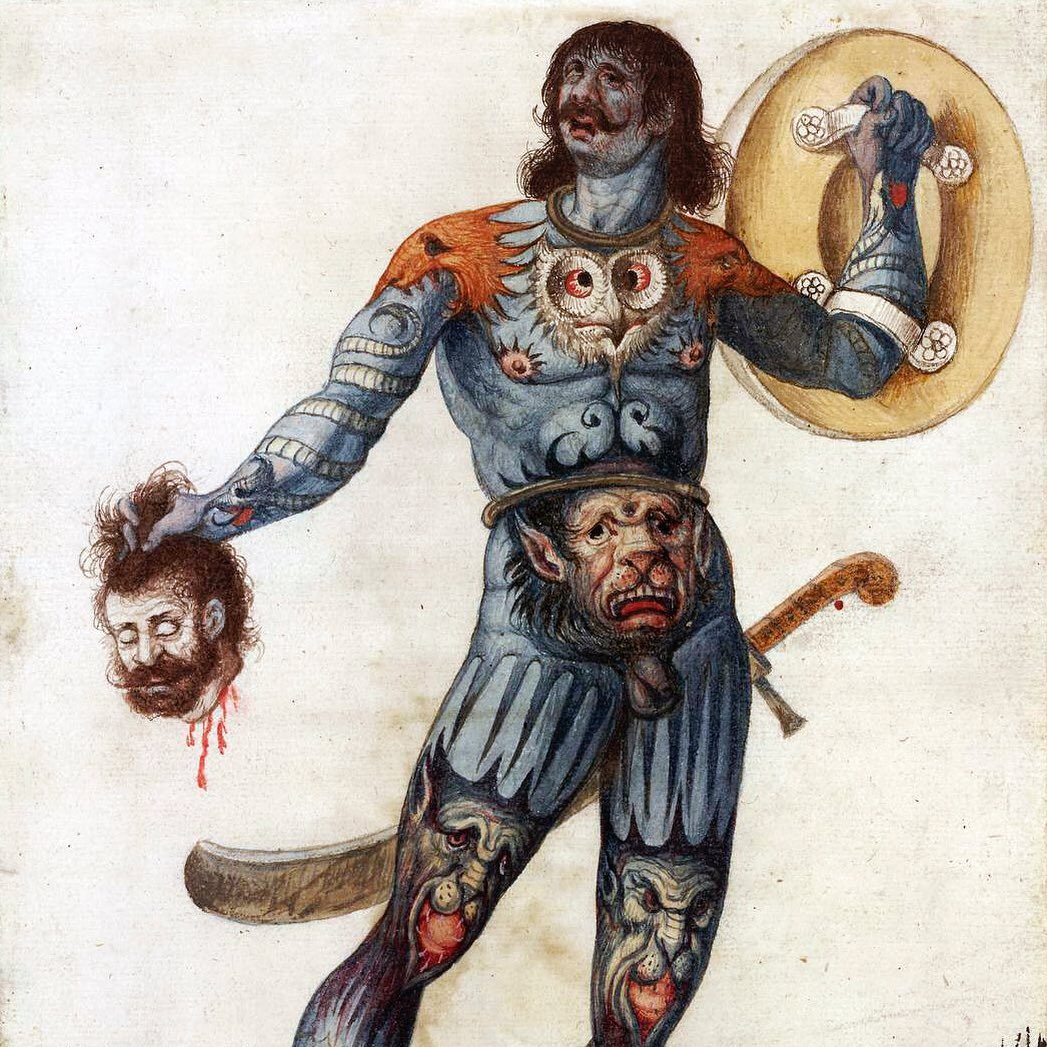
J. Caesar, De Bello Gallico, 5.14 – This and other accounts of the Picts have described literal paint being used to decorate their bodies the flower ‘woad’, particularly when seen in battle (Dibon-Smith, pg. 91, 93). However by at least the second century historians such as Syrian – born Herodian and Roman -born Solinus started writing about the people who inhabited the Greater British Isles and their “animals skillfully implanted on their bodies” (Dibon-Smith, pg. 95) and Lodder, pg.11).
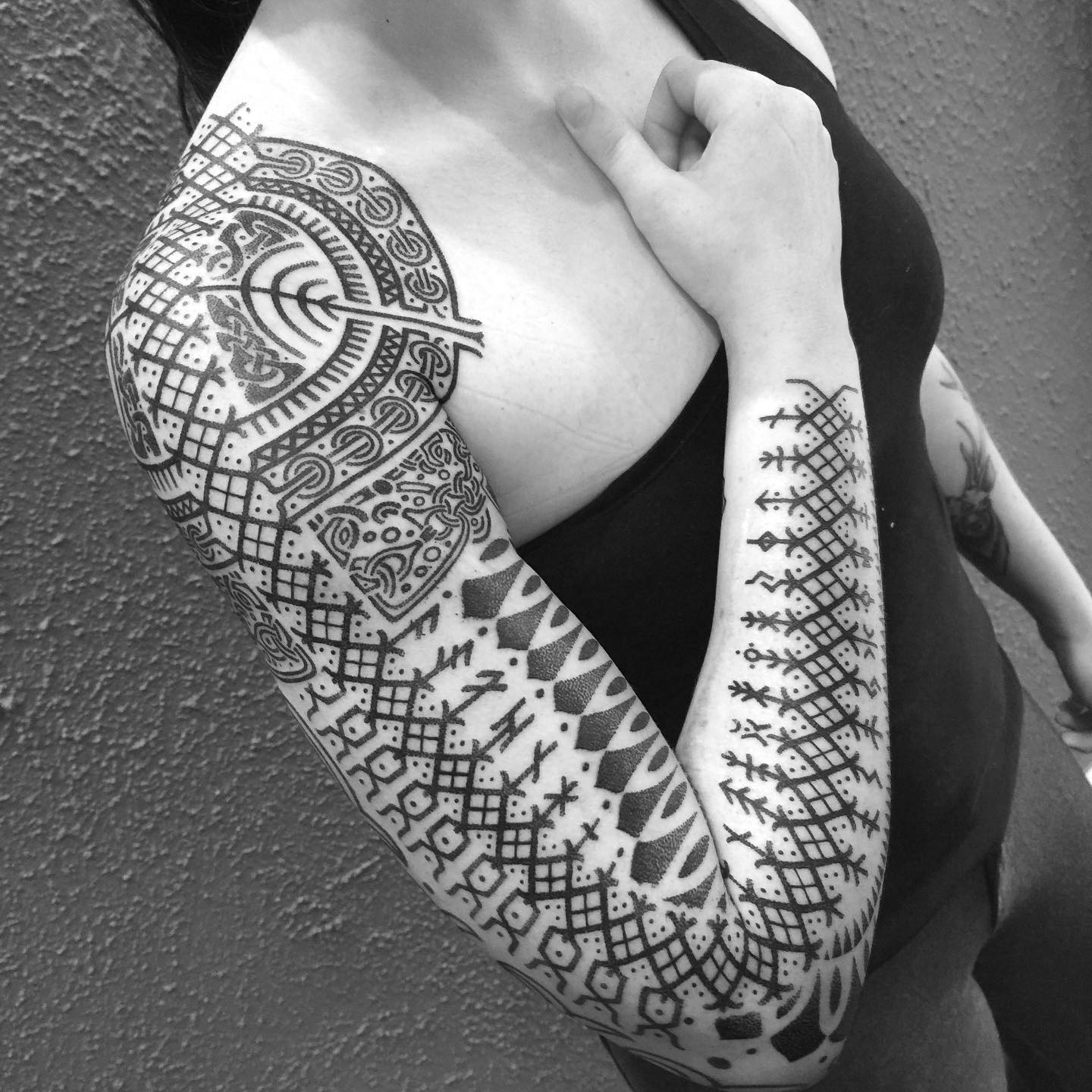
While numerous written sources exist in favour of the idea that the Picts, or at least some of them were tattooed, there are no preserved bodies that can prove this. Unlike in other parts of the ancient world such as Egypt, Siberia and the Northern Alps (Lodder, pg. 12-13).
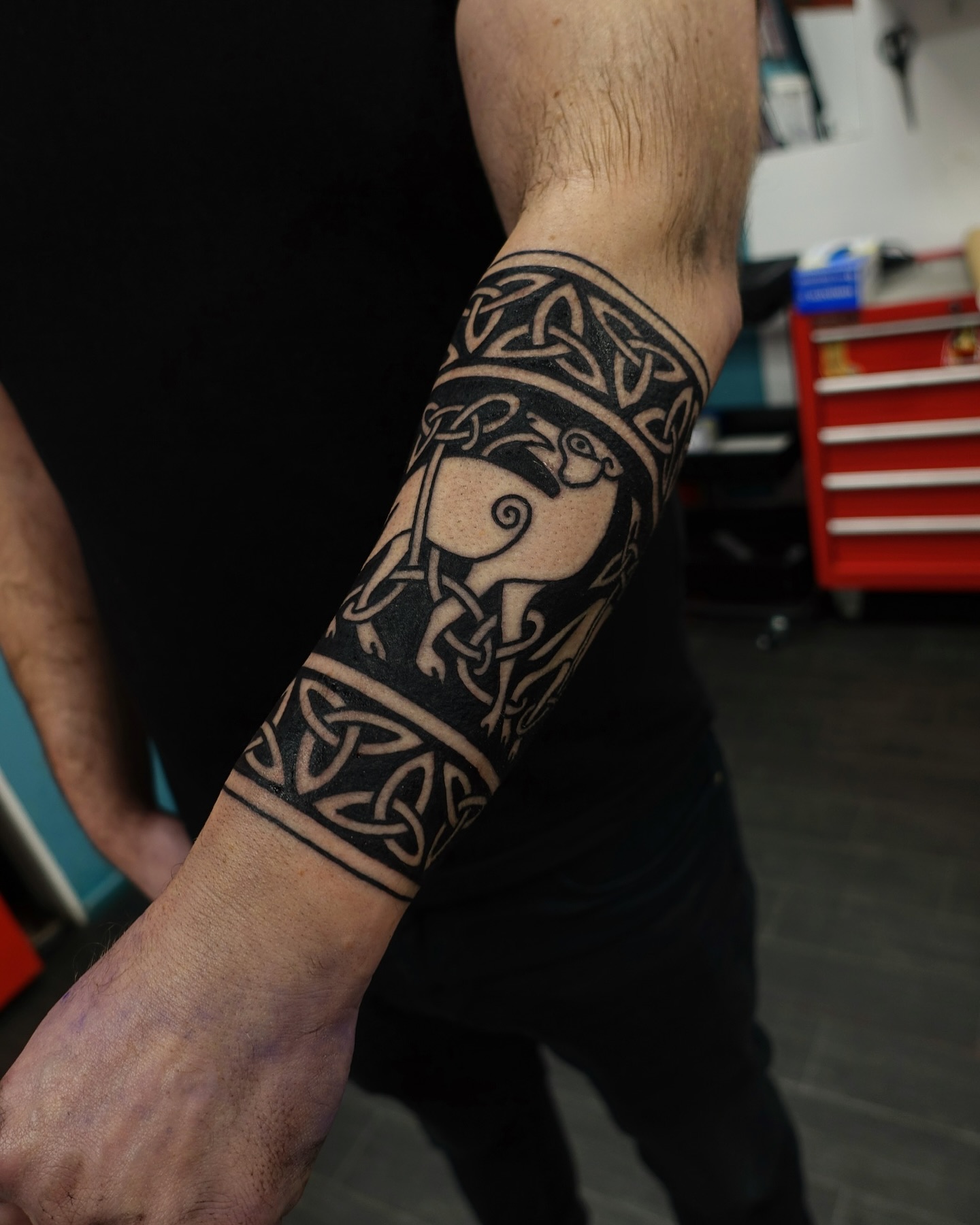
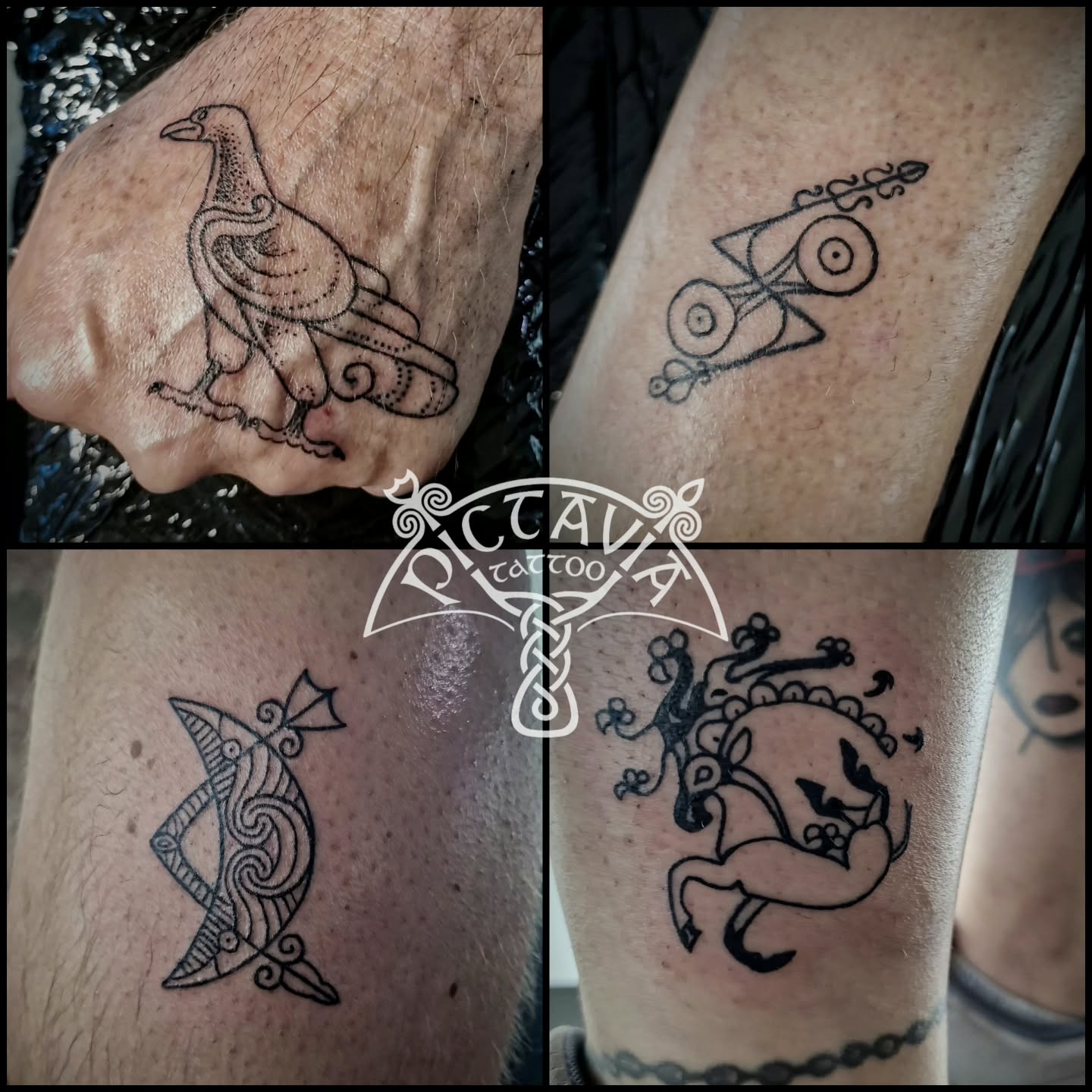
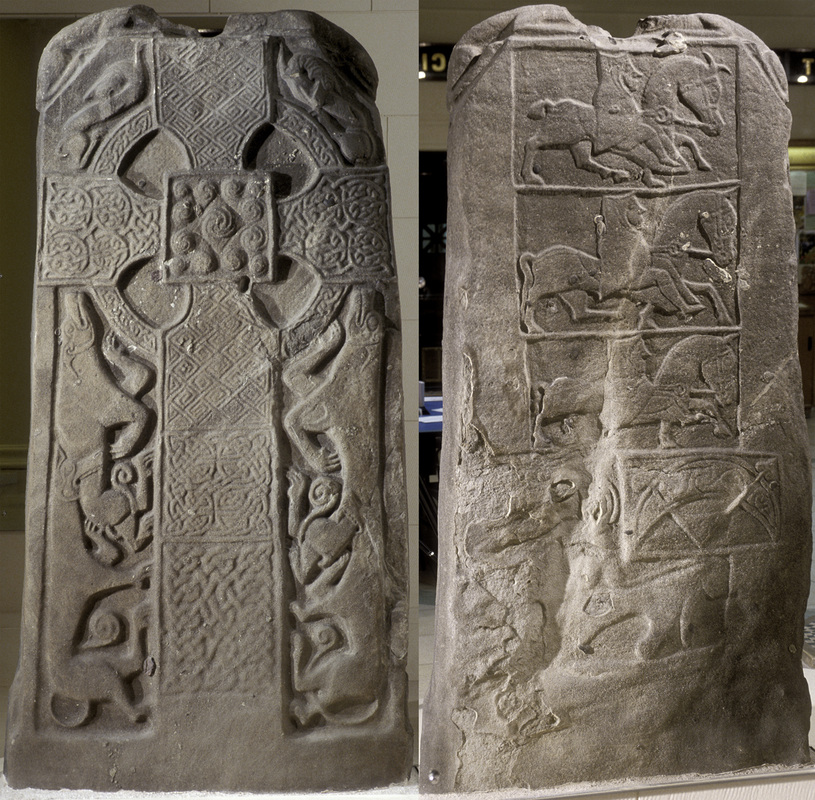
Despite lack of concrete physical evidence that the Picts were tattooed, there is no doubt that they decorated themselves somehow. Their homes, belongings and burial grounds were also certainly decorated with beautiful and recognizable designs because we have archaeological evidence of this. Many of these designs include knotted ropes and other geometric patterns that are famous for being”Celtic”, and simple animals such as horses, wolves and birds among others (NCCSS).
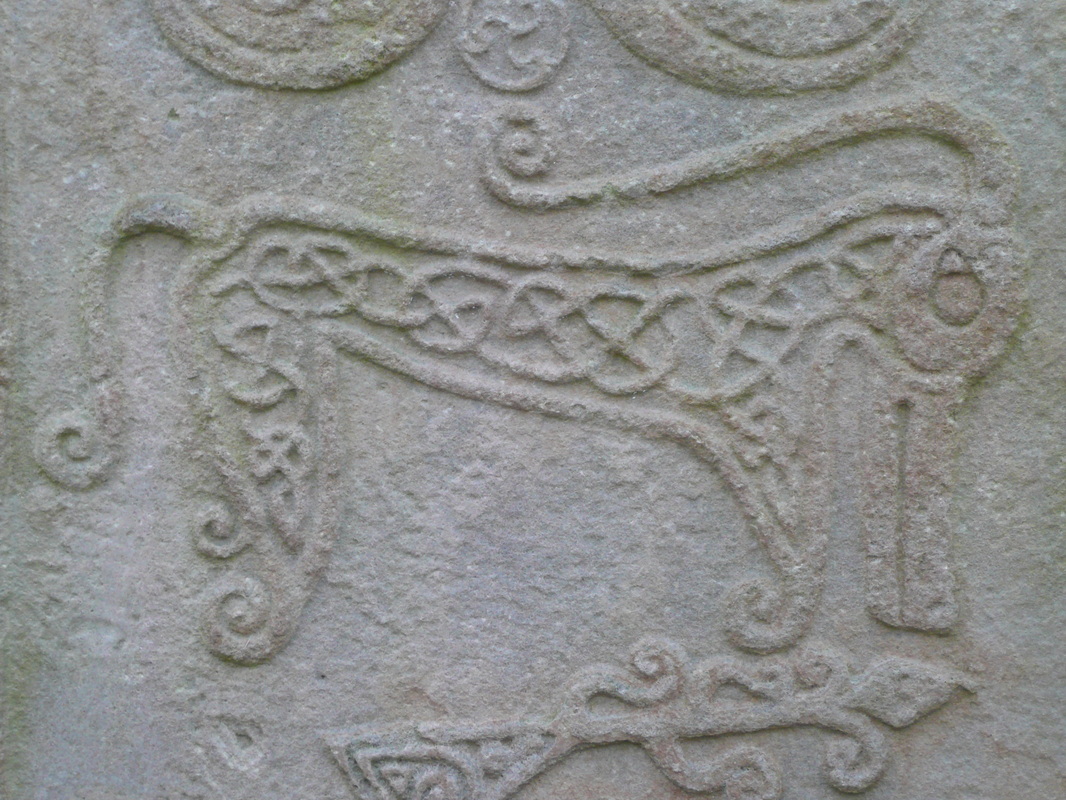
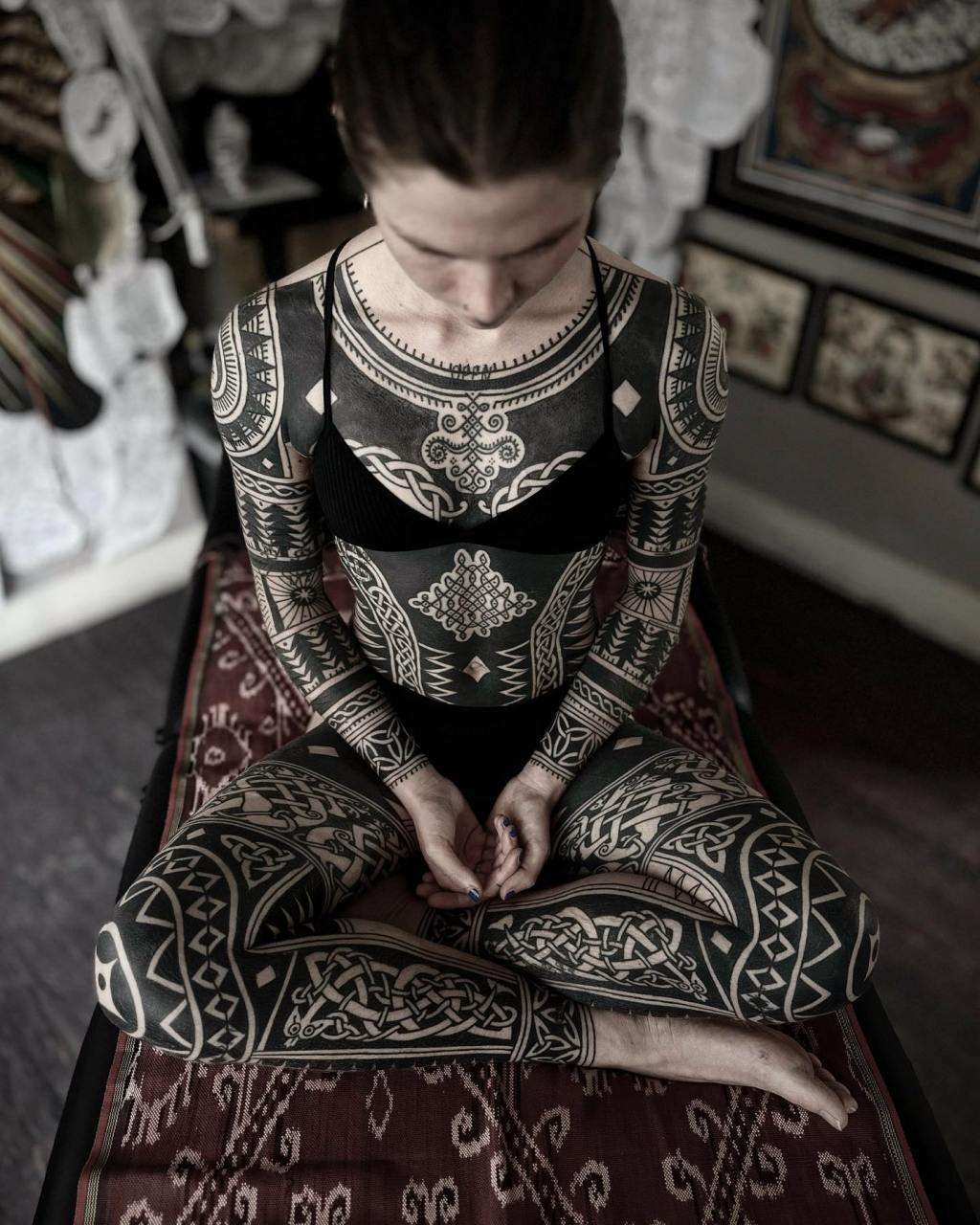
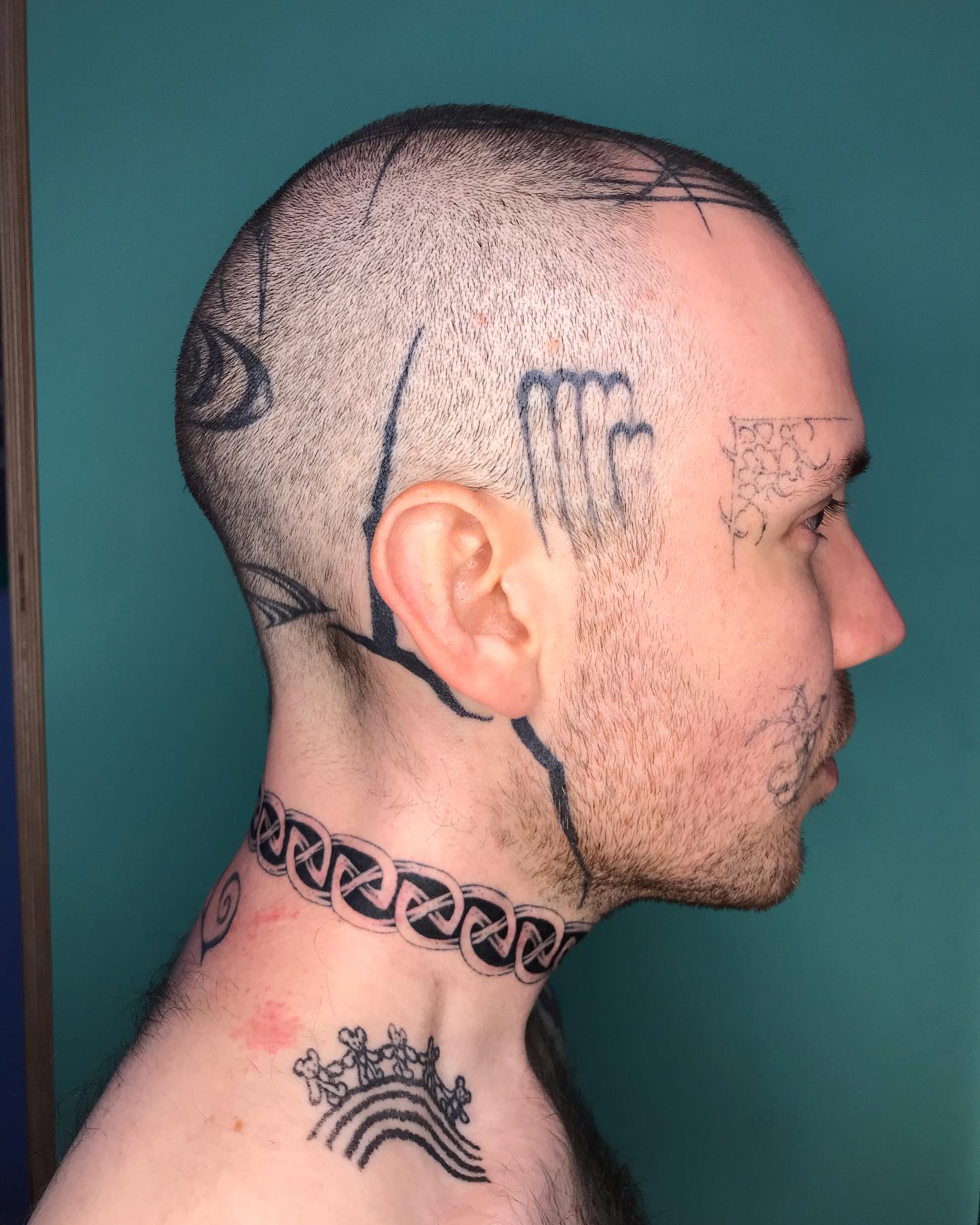
Today, many people get these animals reproduced on their skin, usually included alongside intricate geometric designs that often feature interlace knot-work, spirals, etc. Pictish and other designs from ancient Greater Britain make great options for geometric tattoos for anyone, but specifically folks who want geometric work without the need to appropriate or even draw inspiration from non-Western cultures.
Sources: – Painted People by Matt Lodder -The Picts: A History by Tim Clarkson – The Pictish Tattoo: Origins of a Myth by Richard Dibon-Smith, The National Committee on Carved Stones in Scotland (NCCSS) http://www.carvedstones.scot/pictish–early-medieval.html


 All Things Tattoo